Your first admissions mentoring session is more useful when you arrive with a small set of documents and decisions to discuss. You do not need a perfect application before asking for help. You do need enough information for the mentor to understand your goals, constraints, and current stage.
Start by identifying what you want to leave the session knowing. This might be how to narrow a university shortlist, which application requirement needs attention first, or how to improve the structure of a personal statement.
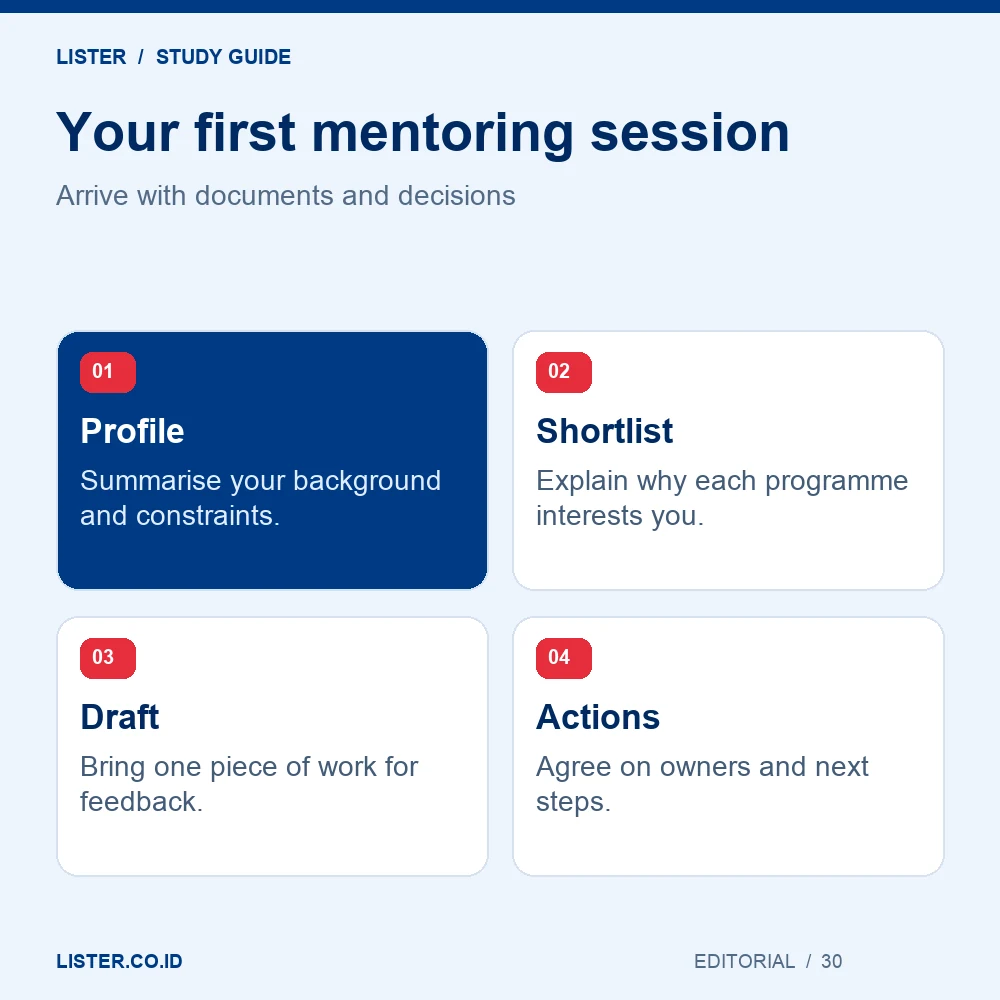
Bring a one-page profile
Summarise your current qualification, subjects or degree, relevant experience, intended level of study, and possible fields. Add your entry-year preference and any constraints that affect your choices, such as location or available funding.
Keep the profile factual. Distinguish completed achievements from activities you plan to undertake. If your grades or test scores are provisional, label them clearly rather than presenting estimates as official results.
Prepare a small, reasoned shortlist
Choose a few programmes and write one sentence explaining why each interests you. Include links to their official admissions pages and note the requirements you have already checked. A reasoned shortlist gives the discussion a better starting point than a list based entirely on rankings.
If you have not selected a country or degree, bring examples of the subjects or problems you want to study. The session can then focus on exploring options rather than pretending the decision has already been made.
Separate admissions questions from funding questions
An offer of admission and an award of funding are different outcomes. Record the application process, deadlines, and documents for each. Do not assume that a scholarship application automatically submits your university application.
Ask the mentor which parts of the process are included in the service. Clarify document review, the number of revisions, response times, interview practice, and responsibilities for final submission. Keep a written record of the agreed scope.
Bring one piece of work for discussion
A CV, draft statement, or short explanation of your academic interests can reveal where feedback would help. If the document includes sensitive information, prepare an appropriate copy for the conversation.
Useful feedback should help you understand the problem and decide how to revise. Your application should remain an accurate account of your own experience and thinking. A mentor should not invent achievements, impersonate a recommender, or promise an admissions outcome controlled by a university.
Questions worth asking in the session
- Which requirement is currently the greatest obstacle to my application?
- What evidence should I add or clarify in this draft?
- Which assumptions about my shortlist need official confirmation?
- What should I complete before the next review?
- How will we know that this stage of preparation is complete?
End by agreeing on a short action list with owners and dates. Avoid leaving with a long list of general suggestions and no clear next step. Review the actual university instructions again before submitting any application.
If you are considering support, explore admissions mentoring with Lister. Share your profile and intended decisions so the first conversation can focus on work that moves your application forward.