The transition from IGCSE to A Level is a change in study habits as well as subject depth. Knowing a definition may no longer be enough when a task asks you to explain a mechanism, connect evidence, or evaluate an argument. Preparing for that change can make the first term more manageable.
This guide is for students continuing through the Cambridge pathway within an international curriculum. It focuses on learning routines after subject choices have been made. It is not a comparison of A Level and the IB Diploma or a replacement for your school’s entry requirements.
Identify the knowledge you will build on
Cambridge International describes AS and A Level study as developing subject understanding and independent thinking. Use the syllabus for your subject and examination year to see what that means in practice.
Ask your teacher which earlier concepts will be assumed. Create a short diagnostic list rather than rereading every IGCSE chapter. In a quantitative subject, this might involve manipulating equations or interpreting a graph. In an essay subject, it might involve constructing a claim and selecting evidence.
Move from recognition to explanation
Consider the difference between “I recognise this diagram” and “I can explain why changing this variable affects the result.” The second statement reveals whether you can use knowledge in a new situation.
After studying a topic, close the notes and explain one relationship aloud. Write a short answer, then check it against the relevant criteria or teacher feedback. Highlight missing reasoning rather than simply copying the model answer.
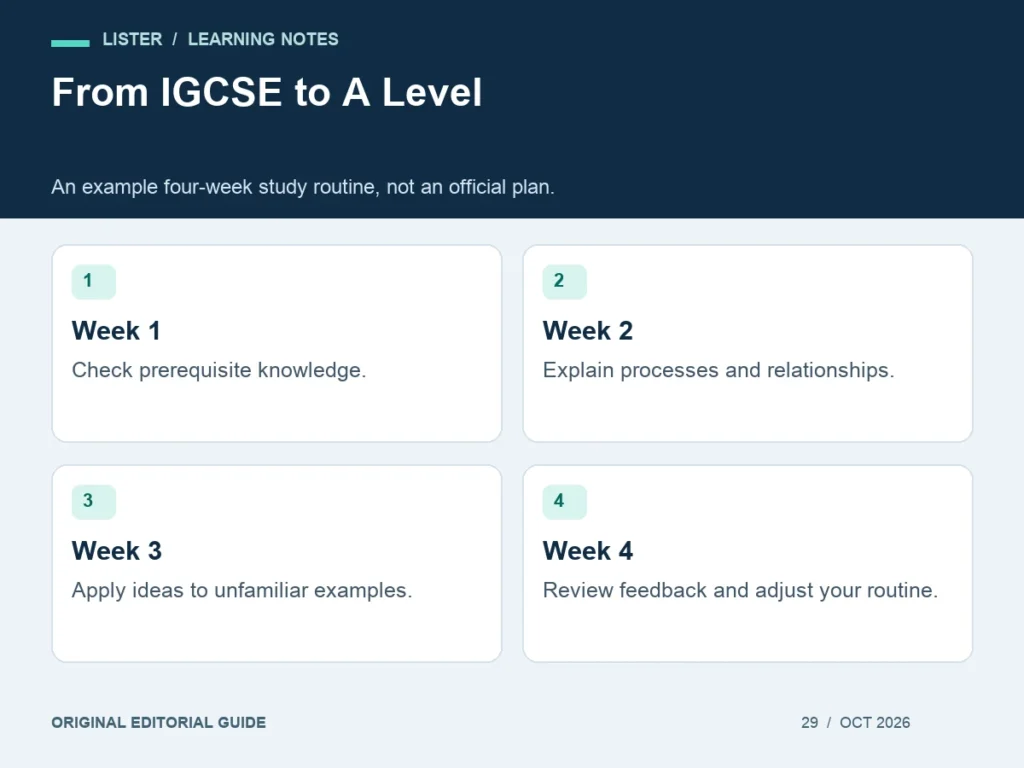
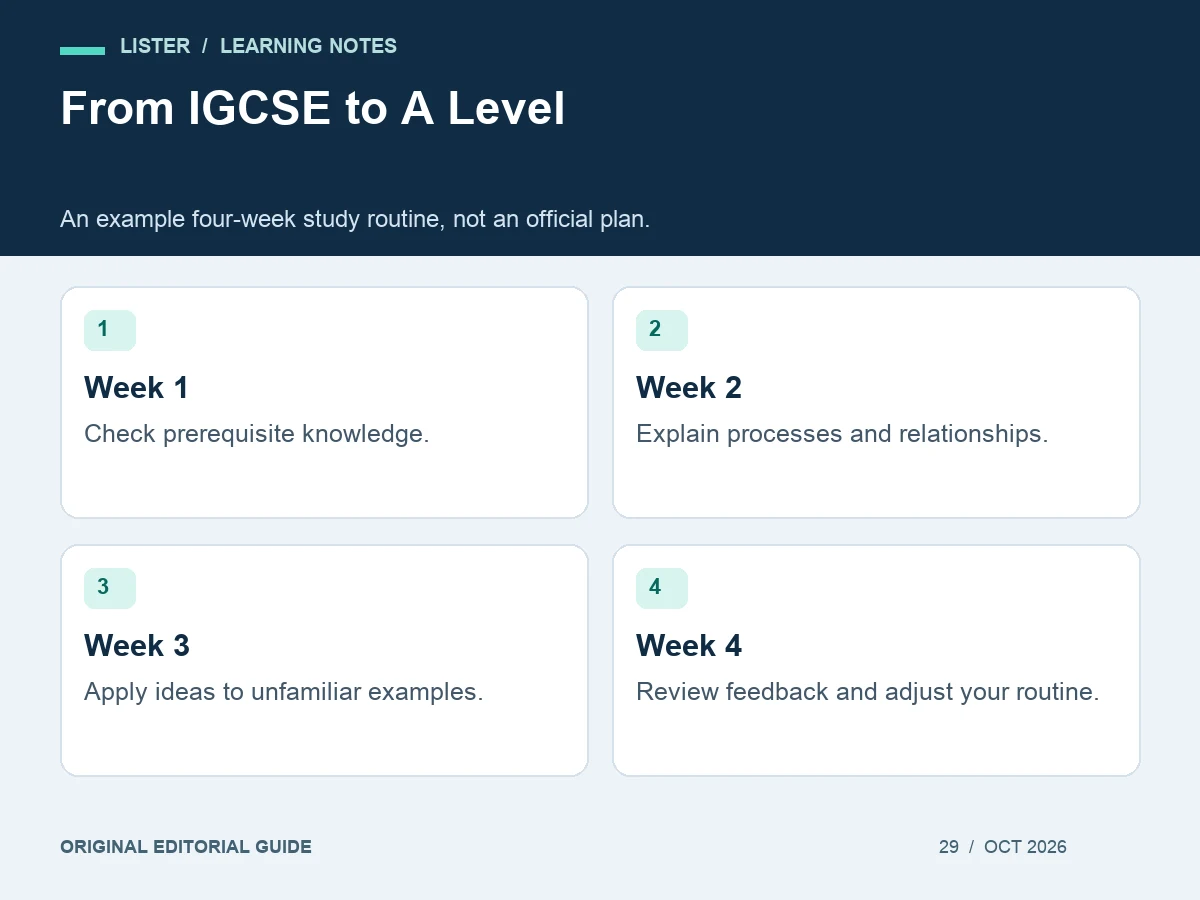
A four-week transition routine
| Week | Focus | Evidence of progress |
|---|---|---|
| 1 | Check prerequisite knowledge | A short list of concepts needing review |
| 2 | Practise explaining processes | Answers with explicit links between steps |
| 3 | Apply ideas to unfamiliar examples | Corrections that explain why an approach failed |
| 4 | Review independently | A realistic routine adjusted from actual workload |
This is an example study routine, not an official timetable or a promise that four weeks will close every gap. Adapt it to your subjects, school schedule, and starting point.
Use feedback as a task list
“Add more detail” is difficult to act on. Ask what kind of detail is missing: an intermediate calculation, a causal link, evidence, or evaluation of a limitation. Convert the feedback into a concrete action for your next answer.
For example, if an essay lists evidence without explaining it, rewrite one paragraph to show how the evidence supports the claim. Then try a different question. Successful transfer matters more than polishing the same answer indefinitely.
Build independence without studying alone all the time
Independent study includes knowing when to ask for help. Bring a specific question, your attempted solution, and the point where your reasoning stopped. This gives a teacher or tutor enough information to provide useful feedback.
Keep a manageable resource set: the correct syllabus, class materials, and relevant practice questions. Adding more websites does not necessarily solve a misunderstanding. First identify what you cannot yet explain or do.
What if your first assessment is lower than expected?
Review the demands of the task before deciding that you chose the wrong subject. Separate knowledge gaps, unfamiliar question formats, and time management. A targeted response to each cause is more useful than treating one result as a final judgement of ability.
Continue learning
- International Curriculum: Choosing Subjects for University
- Apa Itu A Level? Struktur AS, Nilai, Ujian & Cara Memilih Subject
References checked: 26 October 2026.